




- sales/support
Google Chat:---
- sales
+86-0755-88291180
- sales01
sales@spotpear.com
- sales02
dragon_manager@163.com
- support
tech-support@spotpear.com
- CEO-Complaints
zhoujie@spotpear.com
- Only Tech-Support
WhatsApp:13246739196
- Purchase/Shipping/Refund
WhatsApp:13424403025
- HOME
- >
- ARTICLES
- >
- Jetson Series
- >
- Jetson Acc
Jetson Orin Nano JETSON-ORIN-CASE-A User Guide
How to Assemble
- Before assembling, you can first confirm that all the accessories are complete.
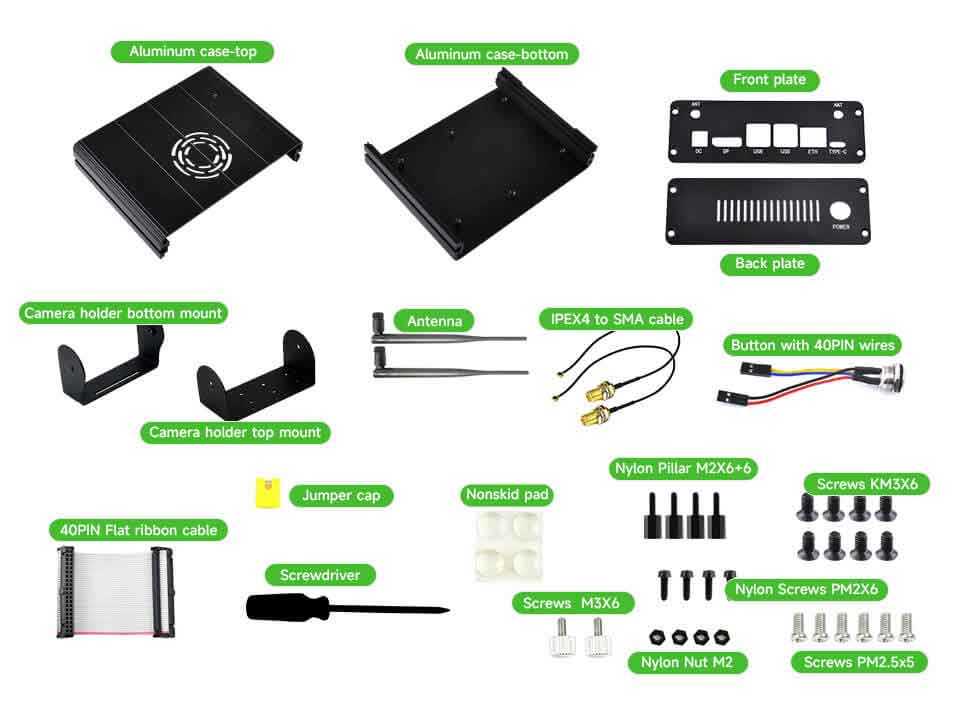
Among them, the list of ⑬ screw packages includes:- Jumper cap
- M3 screws
- M2 nylon pillar
- M2 nylon screws
- M2 nylon nut
- M3 black flat-head screws
- M2.5 silver screws
- Remove the base of the Jetson Orin Nano/NX and also remove the PCB antenna of the wireless card. Please keep the removed parts for future after-sales and service purposes to restore the board when needed.
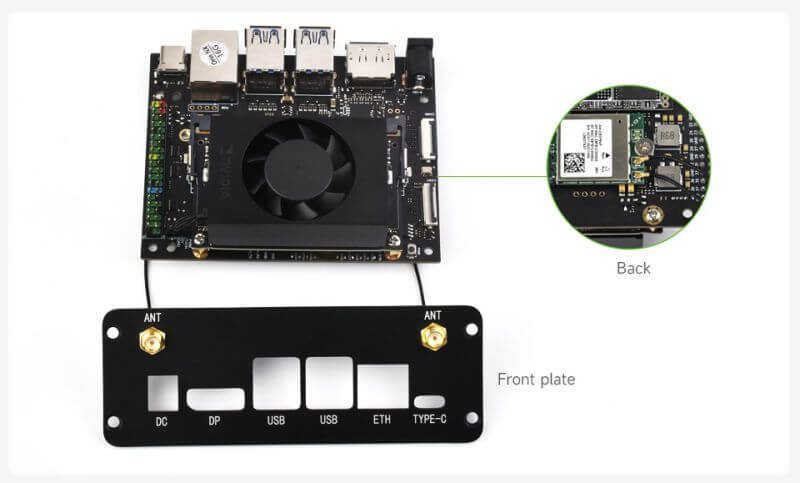
- Install the IPEX4 to SMA cable to the front plate. To fix the SMA connector, you need to unscrew the fixed nut of the cable and lock it on the outside of the front plate. The other end of the IPEX4 to SMA cable cable is connected to the wireless card on the back.
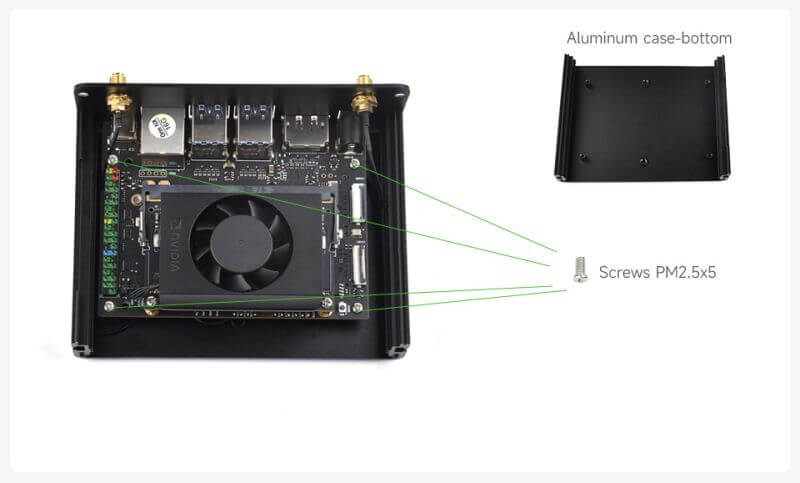
- Fix the Jetson Orin Nano/NX module to the aluminum bottom case with M2.5 silver screws, and simultaneously fix the front plate to the aluminum bottom plate with M3 black flat-head screws.
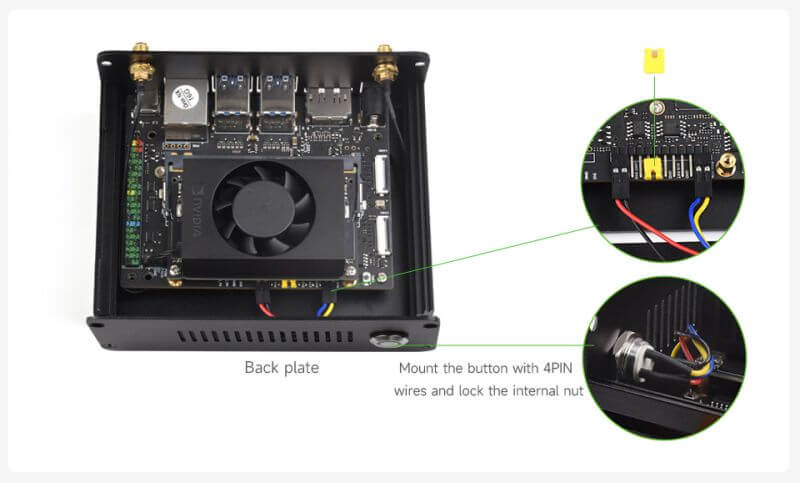
- Insert a jumper cap into the AUTO ON and DIS pins on the module. Unscrew the nut with the LED button and secure it to the back plate. Connect the button wires to the PWR BTN/GND and LED pins on the module.
- Note that the red wire should be connected to LED+, the black wire to LED-, and the yellow and blue wires are for the button, with no specific order required.
- After connecting the button, use M3 black flat-head screws to secure the lower part of the back plate to the aluminum bottom case.
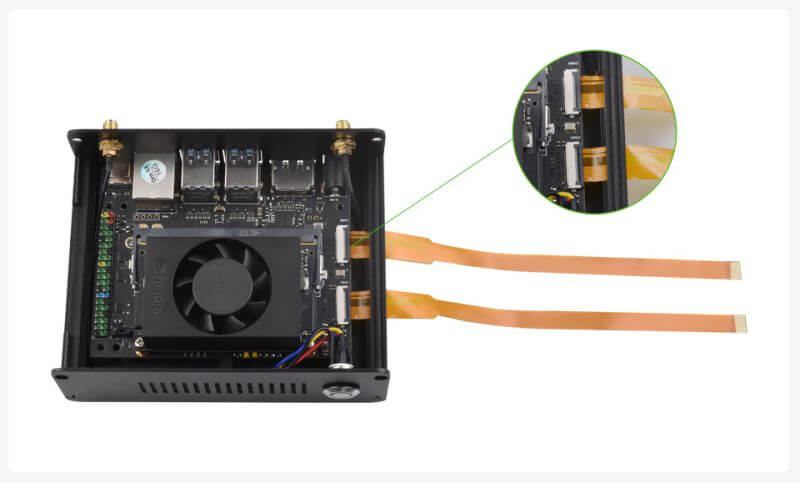
- If you need to connect a camera, thread the camera ribbon cable through the hole on the right side, securing it to the camera interface. Ensure that the metal contacts of the ribbon cable are facing downward.
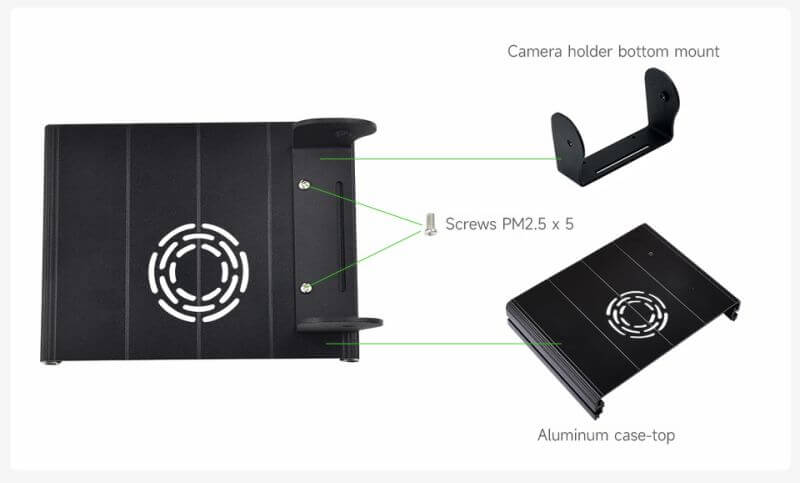
- If you need to connect a camera, secure the camera holder bottom mount to the aluminum top case using M2.5 silver screws.
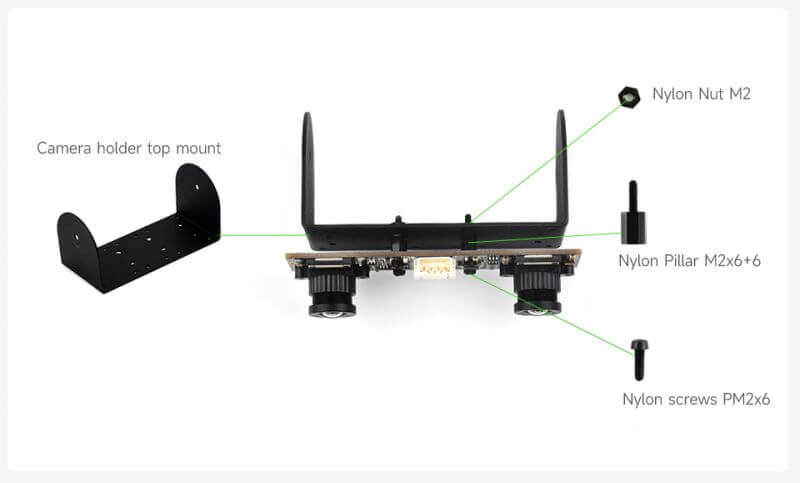
- If you need to connect a camera, use the provided nylon screw set to secure the camera to the camera holder top mount. Make sure to insert nylon pillars between the camera and the bracket to prevent the camera from short-circuiting.
- Please note that you should not use metal screws in this step. Using metal screws could lead to a short circuit with the camera, potentially damaging the equipment.
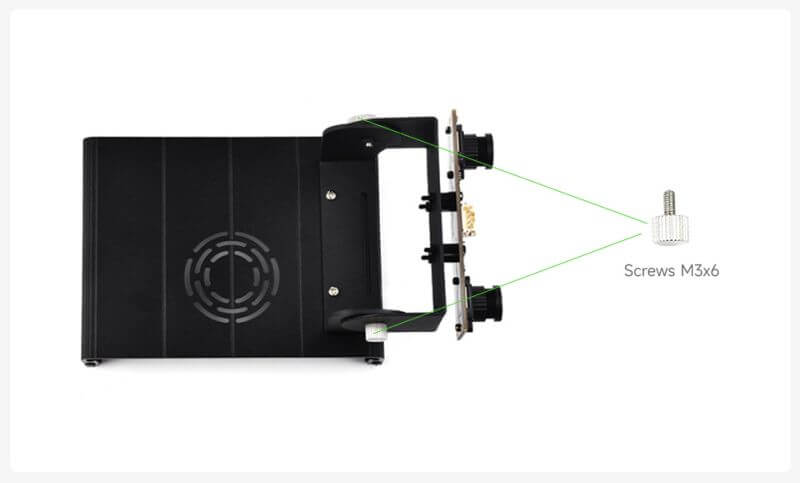
- Fix the camera holder top mount onto the camera holder bottom mount and tighten them together using M3 screws. During use, users can loosen the screws to adjust the bracket's angle as needed.
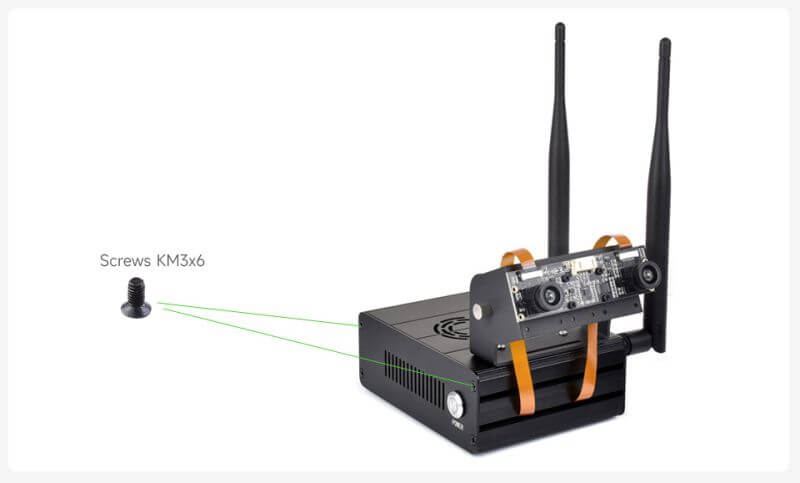
- Install the aluminum top case onto the bottom case, ensuring the correct orientation. Then, use M3 black flat-head screws to securely fasten the upper side of the side panels. Connect the other end of the camera ribbon cable to the camera, and attach the antenna.
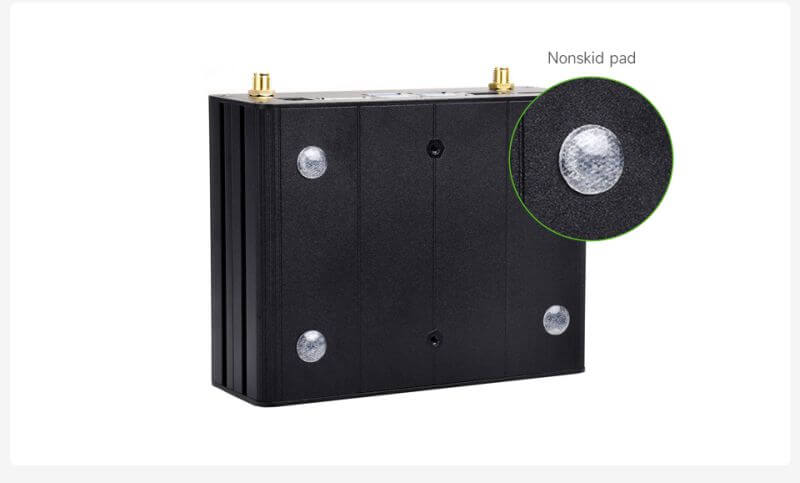
- Finally, users in need can apply non-slip rubber pads to the bottom.
TAG:
ESP32 S3 Development Board 1.85 inch Round LCD Display 360×360 QMI8658 Sensor / MIC / SD /MP3 Audio /Battery Port LVGL/HMI For Arduino
spotpear
Raspberry Pi 5 ABS Case
Computer USB Monitor Screen
RP2040
ADXL357BEZ
FT232RNL USB TO TTL Industrial UART (C) User Guide
Milk-V Duo S Usage of USB Type A interface
Sipeed NanoCluster Mini Cluster Board mini data center For Raspberry Pi CM45 / Computer /LM3H /M4N
Milk-V Duo HUB
USB To CAN
ESP32-S3 LCD
RM520N GL 5G/4G/3G M.2 Moudle IoT EMBB For LTE-A/NSA/SA And GNSS For DFOTA /VoLTE For Quectel
Raspberry Pi 5 Box Case Ki-A PCIe to RJ45 Gigabit Ethernet All Ports To Pi's USB Side
STM32 0.96inch RGB OLED
Programmable Magnetic Encoder
Gyroscope
X1009 Raspberry Pi 5 PCIe To 5-Port SATA SATA3.0 (NOT BOOT From SATA)
Round Rotary LCD touch screen 1.28inch 1.6inch 2.1inch Knob central control lighting LCD
Industrial Modbus RTU RS485 8-ch 30A High Current Relay Module (E) With Digital Input
.jpg)
TAG:
MPS2280P Raspberry Pi 5 PCIe M.2 NVMe SSD Pi5 2280 2242 2230
Raspberry Pi 1.54inch OLED
2.66inch e-Paper e-link Module 360x184 4-Color Red Yellow Black White For Arduino Raspberry Pi STM32 Jetson SpotPear
Raspberry Pi PICO
USB To RS232 485 FT232RNL
Arducam
Raspberry Pi Display
SpeedyBee F405 Mini BLS 35A FC ESC Stack Flight Controller DJI FPV Drone
DeepSeek ESP32-S3 Voice Chat Robot
ESP32
Raspberry Pi 5 PD Trigger
Raspberry Pi 4B
Raspberry Pi HQ High Quality Camera 12.3MP IMX477 Sensor C CS Lenses
SIM8260G M2 3G/4G/5G/GNSS/GPS Sub-6G PCIe M.2 Moudle For LTE-A/NSA/SA For DFOTA /VoLTE For SIMCOM
Raspberry Pi Pico Camera
UGV Rover PT AI 4G 5G OpenCV Robot Car MediaPipe Raspberry Pi4B Pi5
ReSpeaker Lite Voice Assistant Kit AI For SeeedStudio XIAO ESP32 S3/S3 Sense For Arduino
Horizon Sunrise 5 D-Robotics RDK X5
Pi5
1.46inch LCD TouchScreen Display 412×412 SPD2010 For Arduino /Raspberry Pi /ESP32 /Pico /STM32